
The standard
Anyone can pile it up.
Compost is not a thing you mix. It is a process you finish. Ours is built to the composting standard written into the National Organic Program at7 CFR 205.203(c)(2).
- 01
Raw material in
Chicken litter arrives and is blended to the carbon-to-nitrogen ratio the standard calls for — between 25:1 and 40:1. Get this wrong and the pile never gets hot enough to matter.
C:N 25:1 – 40:1
- 02
The pile heats itself
Microbes do the work. Within days the windrow climbs past 130°F on its own — no fuel, no additive. This is the thermophilic stage, and it is the whole point.
131°F – 170°F
- 03
Held hot, and turned
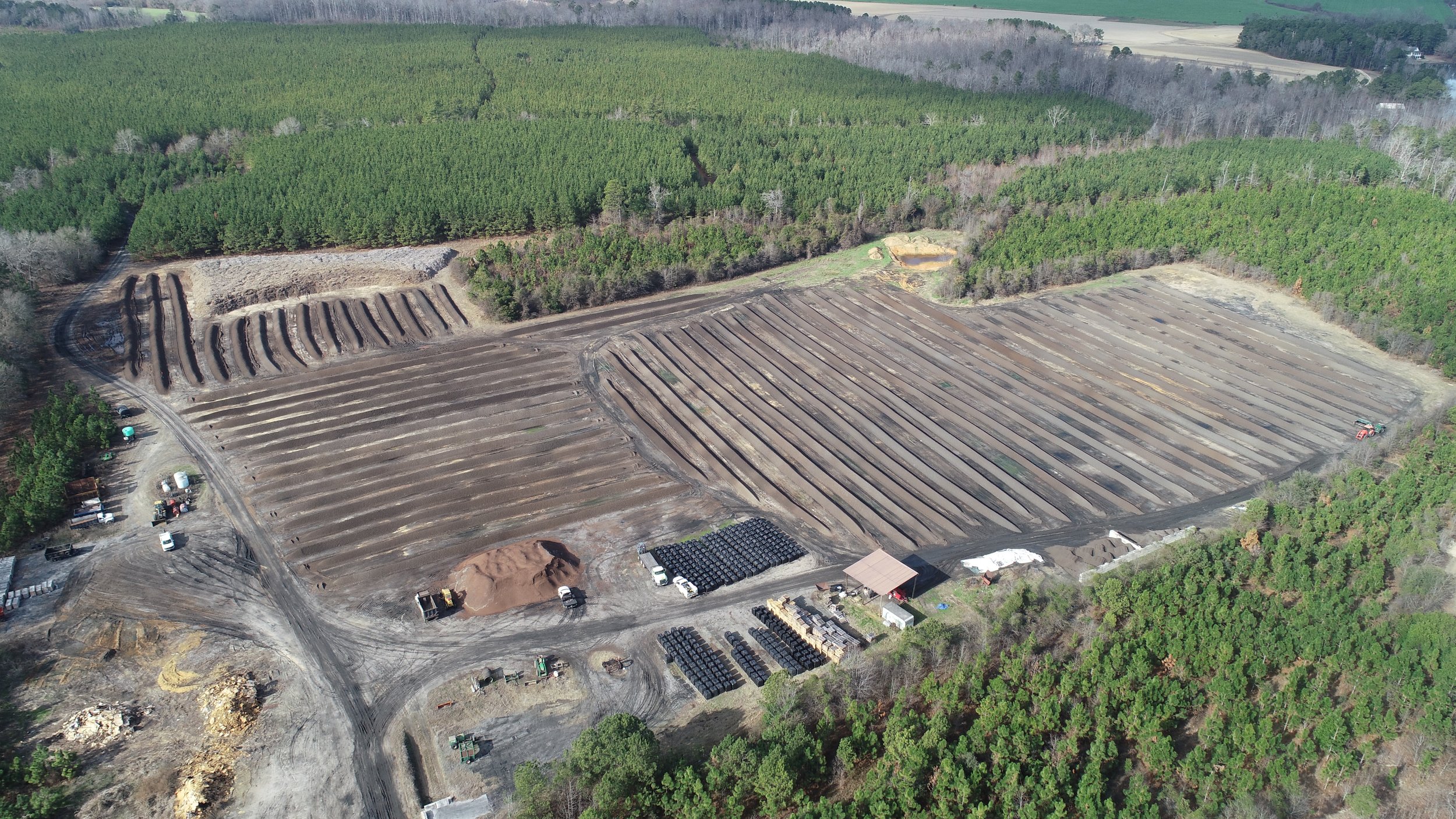
The windrow is held in that range for at least fifteen days and turned at least five times, so every part of the pile — not just the core — spends its time in the heat.
15 days · 5 turns min.
- 04
What the heat retires
Sustained thermophilic temperature is what stands down weed seed and human pathogens. It is also what separates finished compost from a pile of manure.
Weed seed · pathogens
- 05
Cured, not rushed
Then it sits. Curing lets the pile cool and stabilise, and lets the beneficial mesophilic biology move back in. Skipping this is how you end up with compost that burns roots.
The unhurried part
- 06
Bagged on the farm
Screened and bagged here in Blackville, then onto a pallet and out to the dealers — or onto a truck as a cubic yard headed straight to your beds.
Blackville, SC
Certified, tested, and made here
Every bag, held to the same standard.
Our compost is Certified Organic through Clemson Universityand a Certified South Carolina Product, built to the National Organic Program composting standard at7 CFR 205.203(c)(2).
We test our batches, and we publish what comes back — including independent DNA sequencing that identified 1,589 distinct microbial speciesand 18 functional traits scored — all of them published, including the middling ones.