
Inside a windrow: what 135°F actually does
Compost isn't something you mix. It's a process you finish. Here's what happens inside the pile, week by week, and why the heat is the whole point.
August 20, 2026 · 3 min read
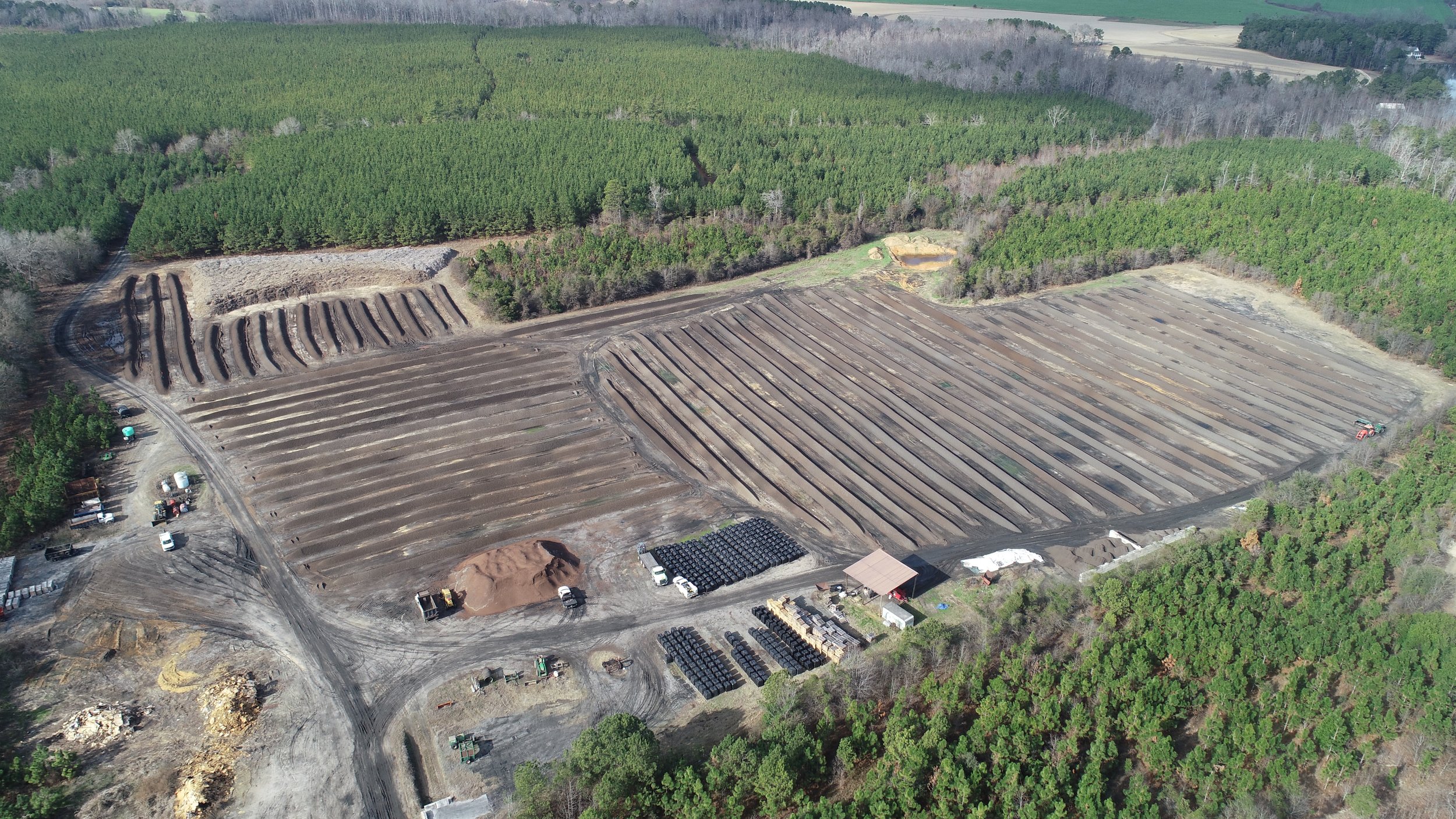
There’s a persistent idea that compost is a recipe — that you combine the right ingredients and you have compost. You don’t. You have a pile. What turns a pile into compost is time and temperature, and there’s no way to hurry it that doesn’t show up in the finished product.
Here’s what actually happens in ours.
Week one: the pile lights itself
We build raw material into long windrows out on the farm — chicken litter, food waste, green waste, wood waste. The carbon-to-nitrogen balance matters here; get it wrong and the pile either sits inert or goes sour.
Get it right and within a couple of days something remarkable happens: the pile starts heating itself. No fuel, no external heat. Mesophilic microorganisms begin digesting the easy material, and the heat they release as a metabolic by-product builds up faster than the pile can shed it. The core climbs past 100°F, then past 130°F.
At that point the mesophiles that started the fire are cooked out of their own comfort range, and a thermophilic — heat-loving — community takes over. The pile reaches around 135°F and stays there.
Weeks one and two: turning
We turn the windrows five times in the first two weeks with a compost turner.
Turning does two things. It puts oxygen back in, because thermophilic decomposition burns through it fast and an oxygen-starved pile goes anaerobic and starts to smell. And it moves material from the outside of the windrow — which is cooler, and hasn’t been through the heat — into the core.
That second reason is the important one. The requirement isn’t that the pile got hot. It’s that every part of the pile got hot. A windrow that sat undisturbed at 140°F for a month still has a cool outer shell full of viable weed seed. Turning is what makes the heat apply to all of it.
We also hold moisture around 50%. Too dry and the biology stalls; too wet and you lose your air.
What the heat retires
Sustained thermophilic temperature is what stands down:
- Weed seed. This is the one gardeners notice. Compost made cool will plant a crop of weeds in your beds along with your vegetables.
- Human and plant pathogens. This is the one that matters more.
- Raw odour. Finished compost smells like a forest floor. Manure that hasn’t been through the process smells like manure, and it will do that in your garden too.
This is also the line between composted and raw manure. Under the National Organic Program, raw manure carries application restrictions and waiting periods before harvest. Properly composted material doesn’t carry the same restrictions — because the process has done the work.
Then it sits
The stage people skip, and the one that separates good compost from compost that burns roots.
Curing. The pile cools, stabilises, and the beneficial mesophilic biology moves back in — the Streptomyces, Pseudomonas and Bacillus that showed up all over our lab results. Nitrogen finishes stabilising into forms that release slowly instead of hitting roots all at once.
Compost sold straight off the hot pile is still biologically busy and chemically unfinished. It’s the reason “manure burns your plants” is common garden wisdom. Cured properly, it doesn’t. Our lab work came back showing no root-burn risk, and curing is why.
Finished
Last step: everything passes through a ⅜-inch screen. What comes out is uniform, dark and crumbly, and goes straight into bags on the farm.
Twelve weeks, roughly. You cannot compress it, and you can tell by looking at the shelf who tried.