Peat-free, and not just as a marketing word
Most potting soil on the shelf is mostly peat. Here's what peat actually costs, what we use instead, and why our bags behave differently in August.
August 27, 2026 · 2 min read
Pick up almost any bag of potting mix in a big-box garden centre and read the ingredients. Peat, usually first. Sometimes listed as sphagnum peat moss, sometimes just as “peat”.
It’s there for good reasons. Peat is light, sterile, consistent, cheap to ship, and it holds water. From a manufacturing standpoint it’s close to ideal.
The problem is where it comes from, and what it does in a Carolina summer.
Where peat comes from
Peat forms in bogs, at a rate of roughly a millimetre a year. A metre of peat is on the order of a thousand years of accumulation. Harvesting it means draining the bog and stripping the surface — and peatlands are among the most carbon-dense ecosystems on the planet, holding more carbon per acre than forest. Draining one releases that carbon.
So a bag of potting soil in South Carolina can involve stripping a thousand-year-old Canadian bog and trucking the result two thousand miles. For dirt.
The other problem: peat goes hydrophobic
This one you can see in your own containers.
When peat-based mix dries out completely — which it will, in a pot, in August, in the South — it becomes water-repellent. The medium shrinks away from the sides of the pot, and the next time you water, the water runs straight down the gap and out the bottom. The pot feels watered. The root ball is bone dry.
Anyone who has grown in containers through a Southern summer has fought this. You water more often and the plant still sulks, because the water isn’t going where you think it is.
What we use instead
Bloomin’ EZ is 100% peat-free, built from three things:
- 50% aged pine bark, half-inch and down. A regional by-product, and the structural skeleton of the mix. It creates air space that lasts rather than compacting into mud.
- 40% our own chicken manure compost. This is the part that holds moisture and carries the biology — the same material the DNA lab found 1,589 species in.
- 10% #3 horticultural perlite. Drainage and aeration, so heavy Southern rain moves through instead of drowning roots.
That blend absorbs water instantly even when dry, because compost and bark don’t repel water the way dried peat does. It holds moisture where roots can reach it, and it doesn’t pull away from the sides of the pot.
The part we like best
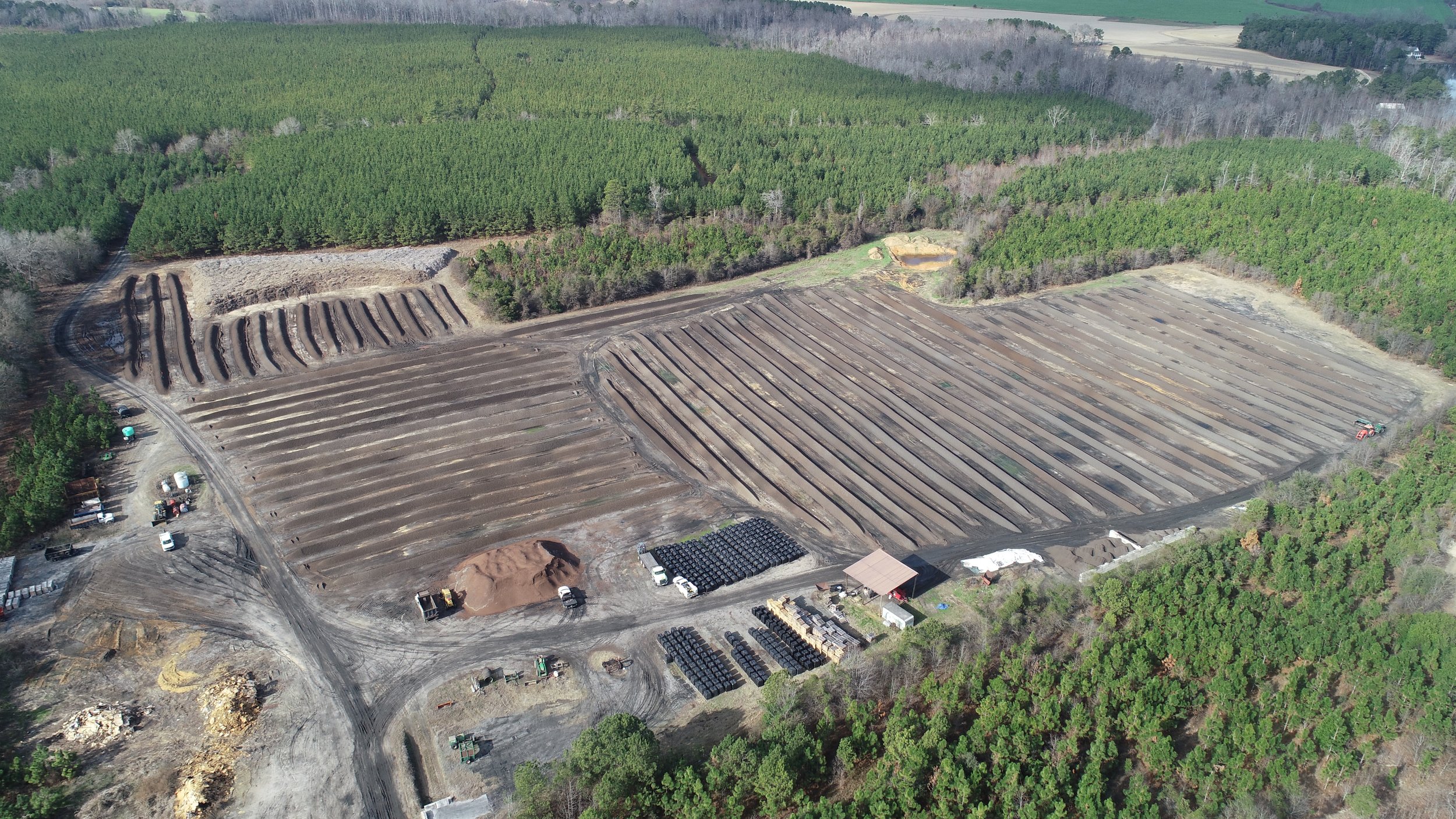
Every ingredient except the perlite is a regional material that was headed somewhere less useful. In 2026 we’ll divert 16 million pounds of agricultural, food and wood waste from landfill and turn it into soil.
Peat-free isn’t a sacrifice we make to look responsible. It’s a better mix for this climate, built out of what’s already here.