16 million pounds: what one composting operation keeps out of the landfill
The unglamorous side of the business. Where our raw material comes from, what it would otherwise have cost, and why 'upcycled' is the accurate word.
August 6, 2026 · 2 min read
Most of what we sell was, a few months earlier, somebody’s disposal problem.
Chicken litter from regional poultry operations. Food waste. Green waste. Wood waste. Material with a cost attached to it — someone was going to pay to bury it.
In 2025 we diverted 7 million pounds of it. In 2026 we’re on track for 16 million pounds — eight thousand tons.
Why landfilling organic material is the worst option
Organic waste in a landfill gets buried under more waste and decomposes without oxygen. That anaerobic breakdown produces methane, a greenhouse gas far more potent than carbon dioxide over the short term. Landfills are among the larger human sources of it.
Compost the same material aerobically — in an open windrow, turned, with oxygen moving through it — and you get carbon dioxide and heat instead of methane. Same material, different chemistry, because of oxygen.
Then the carbon that’s left goes into the ground as stable organic matter rather than into the air. Our lab work scored 89% for carbon fixation: this compost builds soil organic matter rather than burning off.
“Upcycled” is the accurate word
Recycling generally means breaking something down to make more of the same thing. Upcycling means the output is worth more than the input.
That’s the honest description of what happens here. Litter and wood waste go in as a liability. What comes out is a certified organic soil product carrying 1,589 microbial species. Same atoms, considerably more useful.
What it looks like in practice
It isn’t romantic. It’s trucks, a loader, a compost turner, a moisture probe and a lot of turning. The material arrives smelling like exactly what it is. Twelve weeks later it smells like a forest floor.
The transformation is entirely biological. Our job is to give the microorganisms the right carbon-to-nitrogen balance, enough oxygen, about 50% moisture, and enough time — and then not rush them.
Why this ends up on a website about dirt
Because the alternative was a landfill, and because it explains the product.
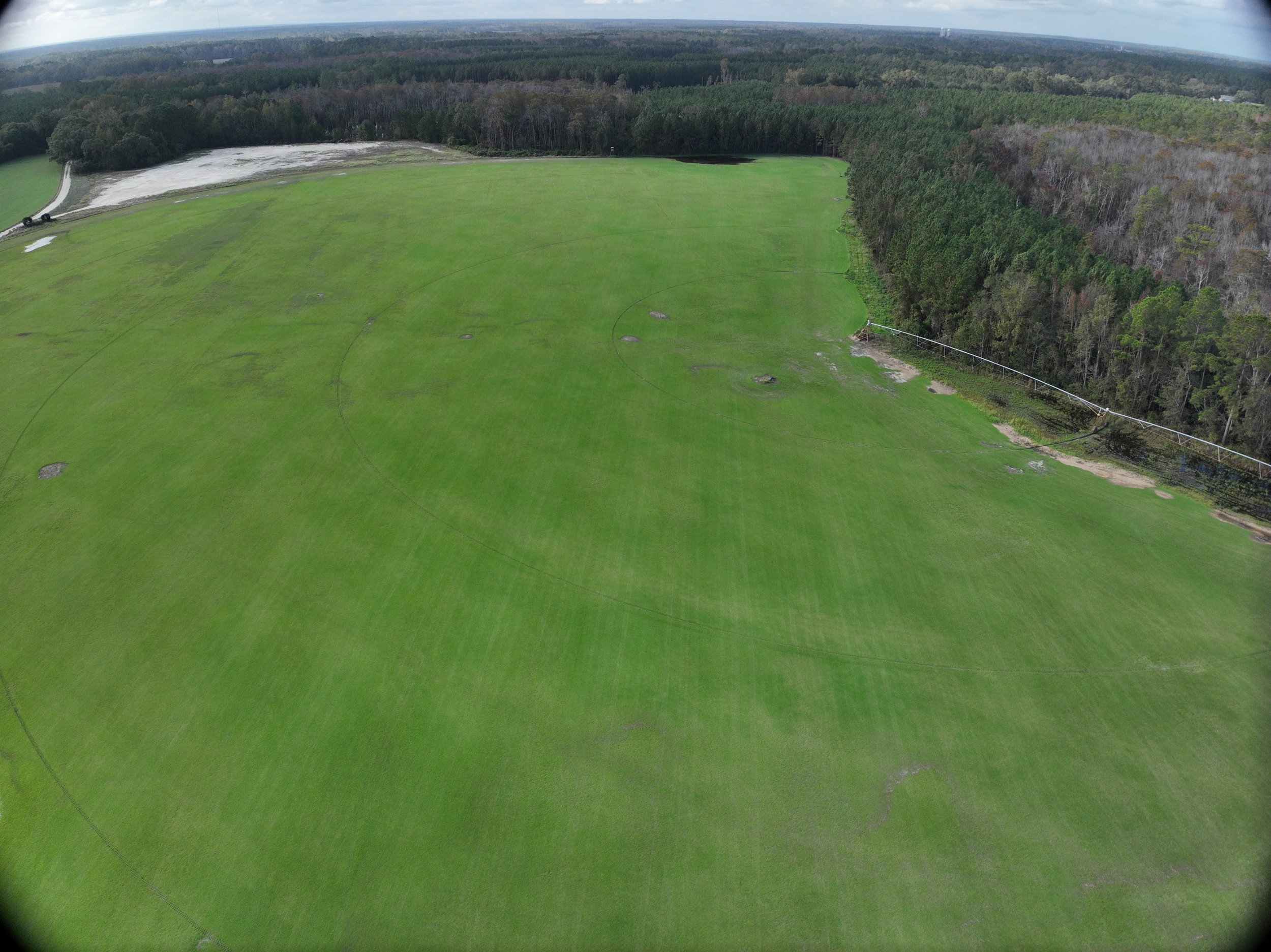
A bag of our compost is a regional loop closed on itself: material from farms and mills around Barnwell County, processed on a farm that’s been here since 1923, sold to gardeners and growers in the same four states. It doesn’t cross an ocean and it isn’t stripped from a thousand-year-old bog.
Sixteen million pounds is a real number and we’ll publish next year’s whether it goes up or down. That’s the deal with putting numbers on a website — you have to keep publishing them.